

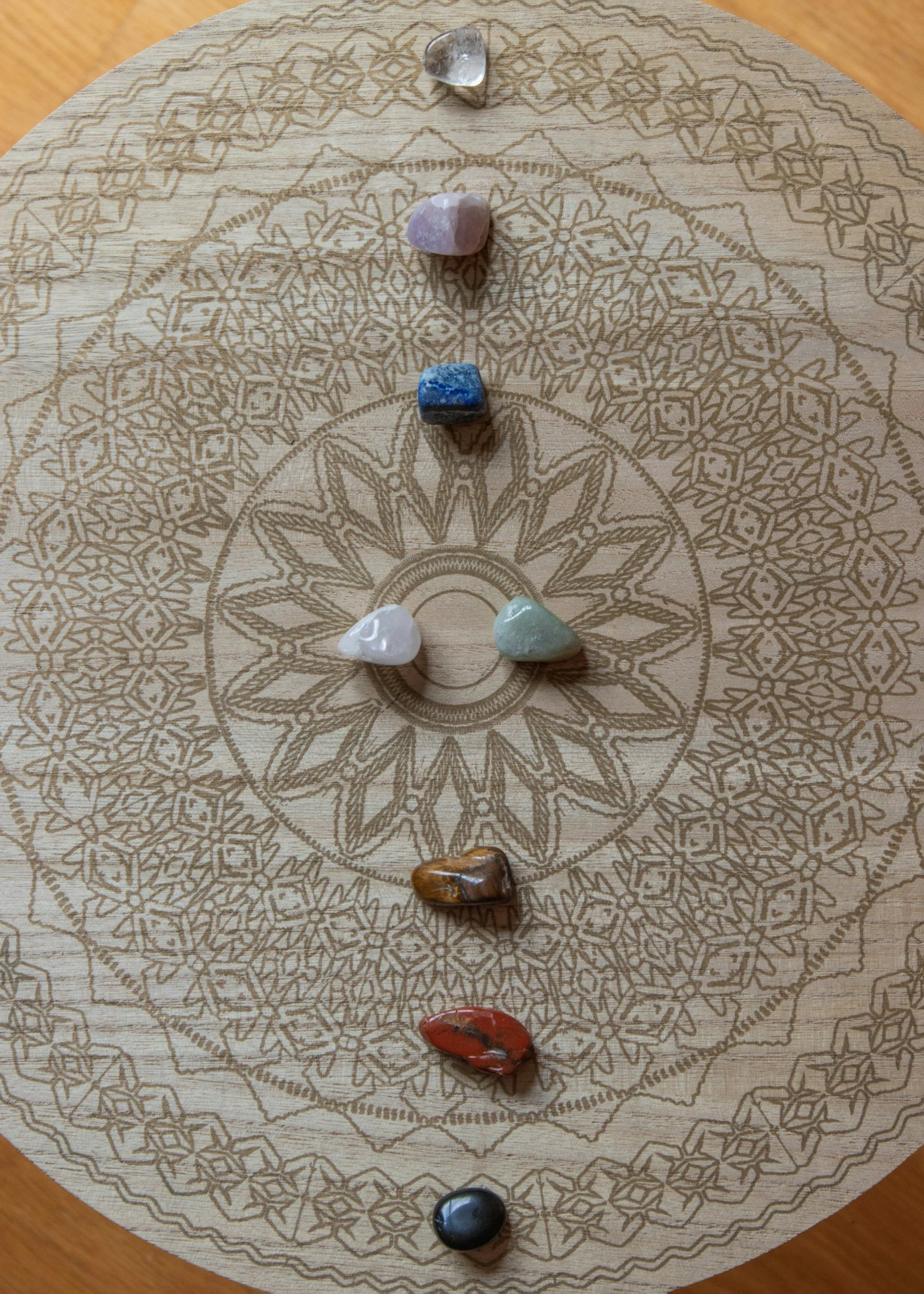
The Chakras

The chakra system is old. It was built from the inside — from centuries of people paying close attention to where in the body experience concentrates, where energy seems to gather or stall, where emotional and physical life overlap.
The nervous system map is newer. It was built from the outside — through dissection, imaging, clinical observation.
But they are mapping the same territory.
The places the chakra system identified as centers of energy are, almost without exception, the places where the body's regulatory architecture is most dense — where major nerve plexuses, autonomic ganglia, and endocrine glands converge.
The root sits where the sacral and coccygeal plexus anchor survival signaling into the pelvic floor. The felt experience here is safety or threat, ground or collapse.
The sacral center sits over the hypogastric plexus — the lower gut, the reproductive organs, the body's oldest relationship to desire, creativity, and appetite.
The solar plexus maps onto the celiac plexus, one of the largest autonomic relay stations in the body. This is where the vagus nerve branches into the organs. It is where most people feel anxiety, power, dread, and gut-knowing — because it literally is.
The heart center sits over the cardiac plexus, where sympathetic and parasympathetic signaling meet to regulate the rhythm of the heart. Connection, grief, love, and loss concentrate here not as metaphor but as physiological event.
The throat maps onto the pharyngeal and cervical plexus — voice, swallowing, the muscles that tighten when something can't be said.
The third eye sits over the hypothalamic-pituitary axis, the master endocrine regulator — the place where the nervous system translates perception into hormonal instruction.
The crown corresponds to cortical integration — the brain's capacity to synthesize everything below it into coherent awareness.
What the chakra system was tracking, long before anyone had the language of neuroscience, was this: the body does not process experience evenly. It concentrates sensation, regulation, and meaning in specific places. And those places have architecture — nerve density, glandular activity, autonomic switching — that makes them more responsive, more volatile, and more available to attention.
In a Reiki session, when a practitioner's hands rest at these areas, they are not channeling something mystical into an abstract energy center. They are bringing warmth, presence, and stillness to the exact places where the nervous system's regulatory machinery is most concentrated — and most likely to be holding patterns of tension, constriction, or protective bracing.
The chakra map and the nervous system map don't compete. One was drawn from the felt inside. The other from the observed outside. They arrive at the same body.