

The Threads
Patterns traced from their ancient root into lived experience — read slowly, in any order.
What is a pattern for,
once it takes form?
Embodiment is not a downgrade from abstraction. It is purpose becoming inhabitable — the place where meaning becomes participation.
Embodiment · beccasutter.org →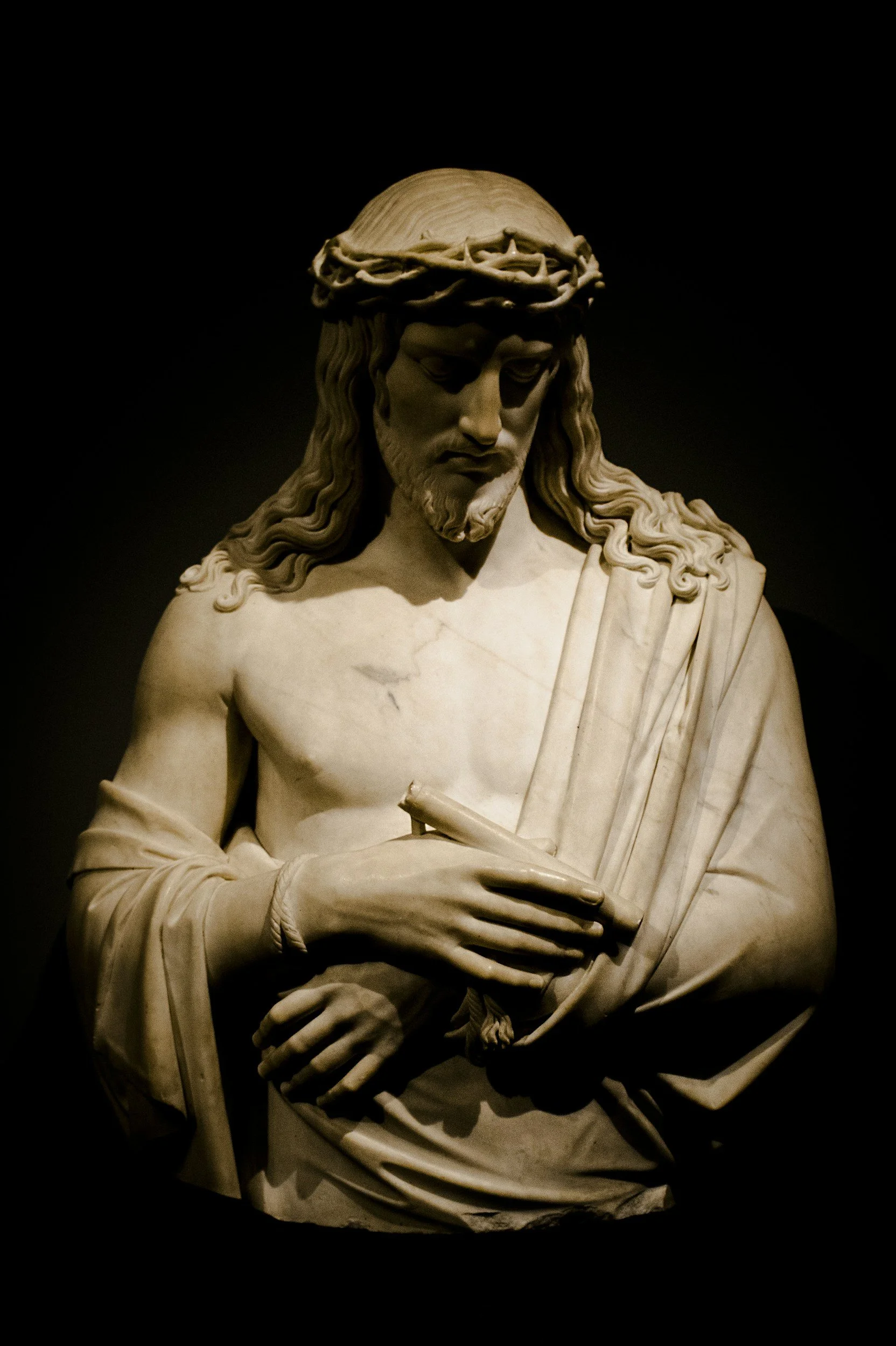
Jesus Embodied
Love Is Known by What It Frees
Jesus does not treat embodiment as a distraction from God. He treats embodiment as the place where God is encountered.
This is why the healing stories matter.
Not because they prove supernatural power in the shallow sense. Not because the point is spectacle. The deeper scandal is that Jesus keeps restoring people to life through the body. He does not save them by making them less human. He returns them to participation.
Rise. Walk. See. Eat. Touch. Be whole.
Come back into the community. Come back into your life.
And he does not make them his property afterward.
Possessive love says: I helped you, so now you owe me.
Jesus does not heal that way.
He frees.
He releases.
He restores agency.
Love is known by what it frees.
This may be one of the clearest ways to recognize the difference between Christic love and control wearing a holy mask.
Control contracts.
Love restores.
Control requires self-betrayal.
Love returns the self to God and to itself.
Control says: shrink so I can feel safe.
Love says: rise and become whole.
This is not sentimental. It is demanding.
Freedom is not comfort. Healing is not easy. Truth is not always gentle. Jesus is not harmless. He threatens every system that depends on people staying small, ashamed, obedient, frightened, divided from their own bodies, and dependent on external authority for permission to live.
That is why incarnation is politically dangerous.
A person who remembers God in the body becomes harder to control.
A person who trusts the body as a site of truth becomes harder to manipulate with disembodied ideals.
A person who knows love by what it frees becomes harder to trap in relationships, religions, families, and institutions that call contraction devotion.
This is why the body had to be distrusted.
Not because the body is sinful.
Because the body knows.

The Instrument of Perception
What emerges when we stop treating consciousness as separate from the body—and begin treating attention itself as a trainable instrument of perception?
This question sits quietly beneath the Yoga Sutras of Patanjali, particularly in the section concerning siddhis: extraordinary capacities said to arise through advanced meditative practice.


An Introduction to Gnosticism
Gnosticism did not simply disappear.
Its themes and images surfaced in medieval Catharism in southern France, in Kabbalah's Lurianic strand (the doctrine of the shevirat hakelim, the shattering of the vessels), in Blake's mythological poetry, in Jung's depth psychology, and in Philip K. Dick's extraordinary late writings. The Nag Hammadi discovery transformed academic study and reignited popular and spiritual interest. Today, several small living communities — including the Ecclesia Gnostica and various Valentinian study circles — continue to practice and transmit these traditions.
The thread running through all of it is the same: the world is not quite what it seems, you are not quite who you think you are, and the light you are looking for may already be looking back at you.

The Only Argument
What death has always been trying to tell us
There is one fact about your life that no system can optimize, no algorithm can smooth away, no convenience can defer indefinitely.
It ends.
Or appears to. Or transforms into something for which we have not yet found honest language. But in the form you currently inhabit — this body, this particular arrangement of memory and personality and presence — there is a horizon. You can feel it if you stop long enough. Most of us have arranged our lives specifically so that we don't.
This essay is an invitation to stop.
Not to be morbid. Not to despair. But because death — held clearly, without the story we've been handed about it — turns out to be the most clarifying force available to a human life. The great context restorer. The thing that makes everything else legible again.
And because we are living inside a civilization that is doing something historically strange. Building systems of infinite distraction, infinite convenience, infinite deferral — and in doing so conducting an unprecedented experiment in what happens to human beings who successfully avoid confronting the one fact that has always, in every culture before this one, been considered the beginning of wisdom.

The Same Territory
Most of us have been asked to choose. The rational or the mystical. The scientific or the sacred. The mechanism or the meaning. This essay refuses that choice — and makes the case that the mystics and the scientists have always been mapping the same territory. One with story. One with data. Neither with the whole map.
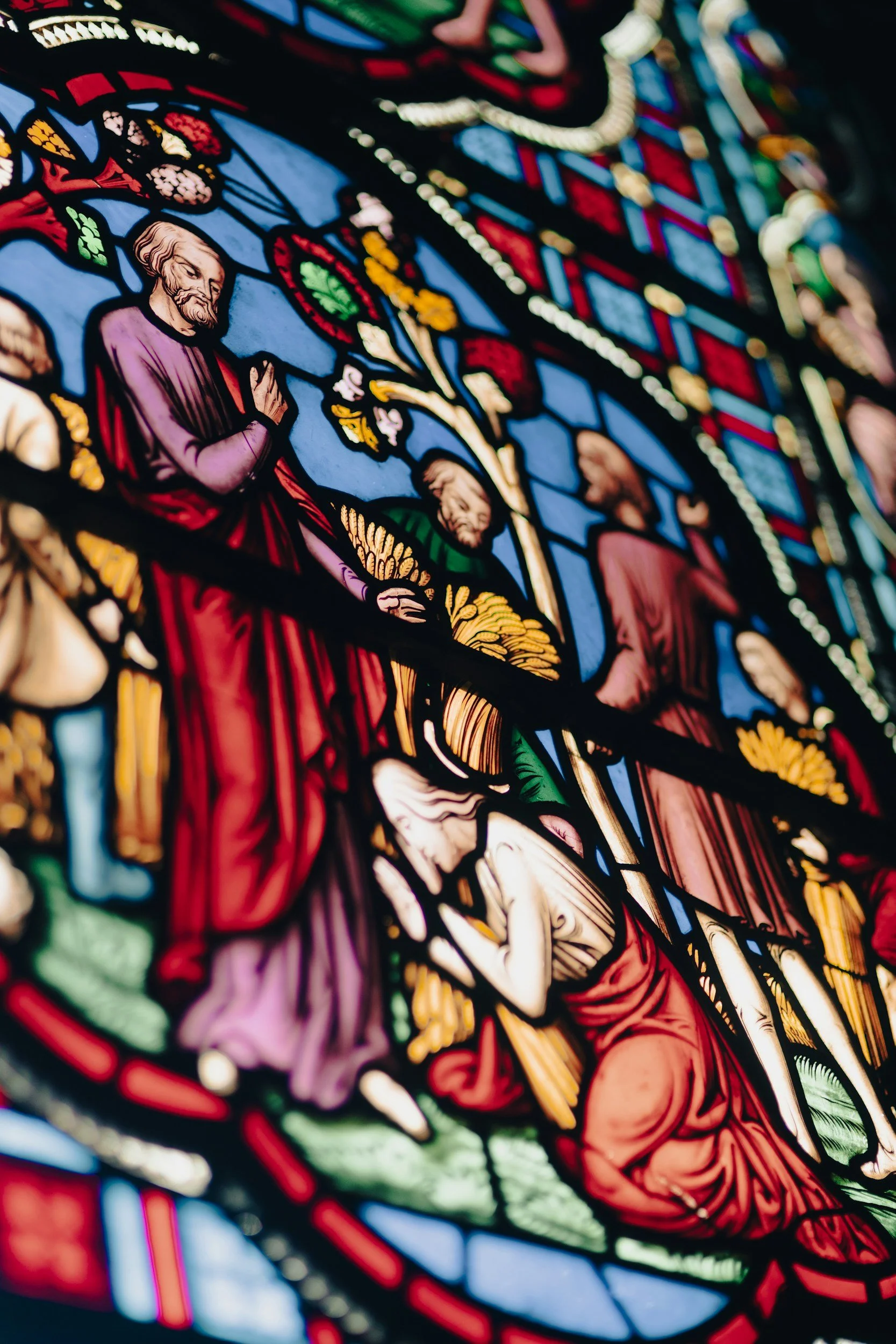
Before the Planets: A Brief Map of Gnostic Cosmology
This is the oldest psychological map I know — a story about awareness descending into form, forgetting what it knew, and the spark that remains anyway.